
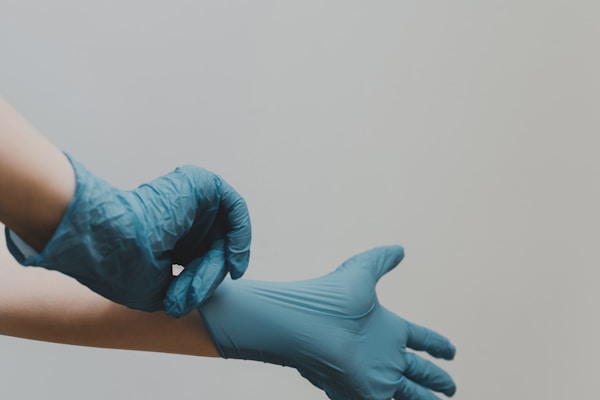
Today is May 12 — International Nurses Day. It is Florence Nightingale's birthday, and every year the world pauses to thank the people who hold our healthcare system together. There will be social media tributes, hospital ceremonies, and politicians standing at podiums calling nurses "heroes."
What nobody will say at those podiums is this: the heroes are drowning. Not in gratitude — in loneliness.
Behind the scrubs and the badge and the 12-hour shifts, nurses are among the most socially isolated professionals in any workforce. They carry other people's pain all day and then go home too exhausted to carry their own conversations. They miss birthdays, anniversaries, and Saturday nights out because they are on night shift. They watch friendships wither because they cannot show up consistently. And when they try to talk about their day, the people in their lives either do not understand or cannot handle the weight of what nursing actually involves.
International Nurses Day 2026 carries the theme "Our Nurses. Our Future. Empowered Nurses Save Lives." But empowerment without connection is just another form of isolation with a motivational poster attached. If we actually want to empower nurses, we need to start by acknowledging what the profession is doing to their social lives — and offering something more useful than a thank-you hashtag.
The Loneliness Numbers Nobody Puts on a Thank-You Card
Let us start with what the research actually says about nurses and social isolation — because the data is significantly worse than most people realize.
- 62% of nurses report emotional exhaustion — the kind that makes even thinking about socializing feel impossible
- Nurses face 3x higher burnout rates than the general working population
- 1 in 3 nurses reports symptoms of clinical depression, with social withdrawal as one of the most common manifestations
- 47% of nurses say they have lost friendships directly because of their work schedule
- Night shift nurses report loneliness rates 68% higher than day shift workers in comparable professions
- The nursing profession has one of the highest rates of compassion fatigue — a condition that directly impairs the ability to form and maintain emotional connections
These are not minor occupational inconveniences. This is a workforce of millions of people — 27 million nurses worldwide according to the WHO — who are systematically being cut off from the human connections their own health depends on. And the cruel irony is not lost on anyone: the people whose entire profession is caring for others are themselves receiving almost no care at all.
Why Nursing Creates Loneliness (It Is Not Just the Schedule)
The obvious explanation is shift work, and shift work is certainly part of it. But the mechanisms that isolate nurses are more complex and more insidious than irregular hours alone.
The Schedule Problem
Nursing schedules are designed for hospital efficiency, not human connection. Rotating shifts — alternating between days, evenings, and nights — make it nearly impossible to maintain consistent social commitments. You cannot join a weekly book club if you work Tuesday nights every other week. You cannot reliably make Friday dinner plans when you might be on call. You cannot maintain the structured repeated contact that friendship requires when your schedule reshuffles every two weeks.
The result is progressive social dropout. First you miss a few gatherings. Then people stop inviting you because you always cancel. Then you stop trying to make plans because the disappointment of canceling feels worse than the loneliness of not trying. Within a few years, your social world has contracted to colleagues — and colleagues you only see during the clinical intensity of a shift are not the same as friends you can be vulnerable with.
The Emotional Depletion Problem
Nursing is not just physically demanding. It is emotionally annihilating in ways that most professions never approach. A nurse might comfort a dying patient's family at 2 AM, manage a violent psychiatric episode at 3 AM, and deliver devastating diagnostic news at 4 AM — all before driving home at 7:30 to a partner who wants to talk about what to have for dinner.
After eight to twelve hours of intense emotional labor, the psychological reserves needed for social interaction are simply gone. Socializing requires emotional bandwidth — the capacity to be present, to listen, to respond, to care about someone else's problems. When you have spent your entire shift caring about other people's problems at maximum intensity, the tank is empty. You do not want to talk. You do not want to listen. You want silence, solitude, and the absence of anyone needing anything from you.
This is not selfishness. It is emotional depletion — a well-documented psychological state in which the brain's capacity for empathic engagement is temporarily exhausted. But from the outside, it looks like withdrawal. It looks like disinterest. It looks like you do not value your friendships. And over time, people draw exactly that conclusion and drift away.
The Compassion Fatigue Problem
Compassion fatigue is the occupational hazard that nobody warns nursing students about. It is the progressive erosion of your capacity to emotionally engage with suffering — a psychological defense mechanism that develops when you are exposed to trauma and pain on a daily basis. In clinical settings, some degree of emotional distancing is adaptive. You cannot function if every patient death breaks you. You need some protective numbness to survive.
The problem is that compassion fatigue does not stay at work. It follows you home. It affects how you relate to your partner, your children, your friends. You find yourself unable to respond with appropriate emotion to the normal difficulties of the people you love. Your friend tells you about a stressful day at work and you feel nothing — because compared to what you see every shift, their stress registers as trivial. You know intellectually that their feelings are valid. But the emotional response is simply unavailable.
Over time, this creates a gap. People around you feel that you are emotionally absent — because you are. They feel judged — because on some unconscious level, you are comparing their struggles to the horrors you witness daily. Relationships that once felt close begin to feel hollow. And the loneliness that follows is particularly painful because it happens not through absence of people but through an inability to fully connect with the people who are right there.
The Identity Problem
Nursing becomes an identity in a way that few professions do. It consumes your schedule, your emotional energy, your physical body, and eventually your sense of self. When someone asks "what do you do?", the answer "I'm a nurse" carries enormous weight — assumptions about who you are, how you think, what you can handle, how you should behave.
This identity compression makes authentic social interaction difficult. In casual settings, people either treat you as a medical resource (asking about their symptoms, showing you rashes, seeking free clinical advice) or place you on a pedestal ("Oh, you're a nurse? That's amazing, I could never do that") that makes genuine human-to-human connection impossible. You are never just a person having a conversation. You are always A Nurse — with all the expectations and assumptions that entails.
Many nurses report that the only people who truly understand their experience are other nurses. But when your social circle contracts to exclusively colleagues, you lose the diversity of connection that healthy social lives require. You end up in an echo chamber of shared trauma without the external perspectives that help process it.
Mental Health Awareness Week 2026 and the Nursing Paradox
This week — Mental Health Awareness Week 2026 (May 11-17) — carries the theme "Every Action Counts." And the coincidence of International Nurses Day falling within Mental Health Awareness Week this year creates an uncomfortable spotlight on the healthcare paradox: the people tasked with managing everyone else's health crises are experiencing their own, largely unsupported.
Nursing culture compounds the problem. The profession valorizes self-sacrifice, stoicism, and putting patients first. Admitting to burnout, loneliness, or emotional struggle feels like professional weakness — especially in a culture that still celebrates the "nurse as hero" narrative. Heroes are not supposed to be lonely. Heroes are not supposed to need help. Heroes are supposed to give care, not require it.
This narrative is killing nurses. Not metaphorically — the nursing profession has elevated rates of depression, anxiety, substance use, and suicide compared to the general population. And while the causes are multifactorial, social isolation is a consistent thread through the research. Lonely nurses burn out faster, leave the profession sooner, make more clinical errors, and experience worse health outcomes themselves.
If "every action counts" for mental health, then one of the most impactful actions we can take as a society is creating accessible, judgment-free spaces where healthcare workers can exist as human beings — not heroes, not professionals, not clinical resources — just people who need connection like everyone else.
What Actually Helps: Evidence-Based Approaches for Nursing Loneliness
The standard advice — "maintain work-life balance," "set boundaries," "make time for self-care" — is well-intentioned and almost entirely useless for someone working rotating 12-hour shifts in an understaffed ward. Let us talk about what the research actually shows helps nurses combat social isolation.
1. Low-Commitment, Flexible Social Contact
Nurses cannot commit to the structured weekly activities that friendship research says are optimal. They need social options that accommodate unpredictable schedules — interactions that can happen at 11 PM after a shift or during a random Tuesday morning off. Soft socializing — low-pressure, activity-based connection without rigid scheduling requirements — fits nursing life far better than traditional social commitments.
This is where digital connection becomes not a luxury but a necessity. Anonymous chat platforms, peer support communities, and conversation-matching services that are available 24/7 provide social contact that actually fits around a nurse's schedule rather than demanding they reshape their life around a social calendar.
2. Identity-Free Spaces
One of the most consistent findings in research on healthcare worker well-being is the relief that comes from spaces where professional identity does not apply. When a nurse enters a conversation simply as a person — not as a medical professional, not as someone expected to be strong, not as someone whose entire identity is caregiving — the pressure evaporates.
Anonymous conversation is uniquely powerful here. In a space where nobody knows you are a nurse, nobody asks you about their symptoms. Nobody puts you on a hero pedestal. Nobody assumes you can handle anything. You are just a person talking to another person. And that freedom — the freedom to be human rather than professional — is profoundly restorative for people whose professional identity has consumed their personal one.
3. Peer Connection With Shared Experience
While identity-free spaces help nurses decompress, connection with people who genuinely understand the nursing experience is equally important. The challenge is finding this outside of the workplace — because work-based peer connection carries the weight of professional politics, hierarchy, and the reminder of the very environment causing the burnout.
Online communities specifically for healthcare workers (not attached to any hospital or organization) provide peer connection without workplace baggage. These spaces allow nurses to process difficult experiences with people who understand the context without explanation — the shorthand of shared professional trauma that civilians cannot access.
4. Micro-Interactions That Rebuild Social Capacity
When you are deep in compassion fatigue and emotional depletion, the thought of a two-hour dinner with friends feels as exhausting as another shift. What actually helps is smaller: five-minute conversations, brief text exchanges, short voice messages, a quick anonymous chat session. These micro-interactions rebuild social capacity without demanding the emotional bandwidth that depleted nurses simply do not have.
Think of it like physical rehabilitation after an injury. You do not start with a marathon. You start with gentle movements that slowly rebuild strength. Social reconnection after burnout-induced isolation works the same way — start small, build gradually, and do not punish yourself for not being able to do more.
5. Conversations Without Consequences
Nurses operate in an environment of extreme consequences. Every action carries clinical weight. Every word matters. Every interaction is governed by protocols, liability, and the knowledge that mistakes cost lives. This constant state of high-consequence engagement is exhausting in a way that few professions replicate.
Social interactions that carry zero consequences — where nothing you say will be documented, evaluated, or held against you — provide a counterbalance that nurses desperately need. Safe stranger conversations offer exactly this: a space where you can say what you actually feel, vent without worrying about professional repercussions, and exist without the weight of accountability that defines your working life.
The Case for Anonymous Venting: Why Nurses Need Spaces Without Judgment
There is a specific type of social interaction that research shows is particularly beneficial for healthcare workers experiencing burnout: unstructured emotional disclosure to non-connected others. In plain language: talking honestly about your feelings to someone who has no connection to your professional or personal life.
Why is this more effective than talking to friends, family, or even therapists?
- No professional risk. Admitting to burnout, emotional numbness, or questioning your career to a colleague could affect your reputation. Admitting it to a stranger carries zero professional consequences.
- No emotional labor required. When you vent to friends or family, you often end up managing their emotional response to your distress — reassuring them you are okay, minimizing the severity, protecting them from the darker realities. With a stranger, you owe nothing beyond the words you choose to share.
- No cumulative narrative. A therapist builds a case history. A friend remembers everything you have said. A stranger meets you fresh each time — no accumulated expectations, no pattern-matching, no "you said the same thing last month."
- Freedom from the hero narrative. Family and friends often respond to nursing struggles with "but you're so strong" or "but you're saving lives" — responses that, however well-intentioned, invalidate the pain and reinforce the expectation of superhuman endurance. A stranger has no investment in your heroism.
This is not a replacement for professional mental health support. Nurses experiencing clinical depression, suicidal ideation, or substance dependence need clinical intervention. But for the millions of nurses experiencing the more common landscape of chronic low-grade loneliness, emotional depletion, and social disconnection — talking to someone who has no agenda, no expectations, and no judgment is remarkably effective first aid.
Shift Work and Social Life: A Practical Comparison
Understanding why nursing creates loneliness requires understanding how shift work fundamentally disrupts the social patterns that friendship depends on.
- Regular 9-to-5 worker: Evenings free, weekends free, consistent schedule enables weekly commitments, can reliably make plans, social life exists in the same time zone as everyone else's
- Day shift nurse: Leaves home before 6 AM, returns by 8 PM drained, has some predictable evenings but limited energy, can make weekend plans on non-working weekends
- Night shift nurse: Sleeps during the day when friends are available, awake at night when the world is asleep, circadian disruption causes chronic fatigue that compounds social withdrawal
- Rotating shift nurse: No consistent pattern, cannot commit to recurring activities, constantly canceling plans, friends stop inviting them, social life becomes entirely reactive rather than proactive
The rotating shift nurse — the most common pattern in hospital settings — faces the worst of all worlds. They cannot build the habits that friendship requires because their life has no consistent rhythm. Every social interaction requires active coordination from scratch. There is no "see you next Tuesday" because next Tuesday might be a night shift followed by a sleep day. The structured repeated contact that research identifies as essential for friendship formation is architecturally impossible within a rotating shift pattern.
This is why 24/7 digital social options are not a nice-to-have for nurses — they are the only form of social connection that does not discriminate based on when you happen to be awake.
International Nurses Day 2026: Beyond the Thank-You
Every year on May 12, hospitals organize appreciation events. Politicians post tributes. Organizations release statements. And nurses — many of whom are working a shift that day — smile politely, eat the free cake in the break room, and go back to their patients.
None of this addresses the structural loneliness built into the profession. Appreciation without action is just performance. And what nurses actually need is not more gratitude — it is access to connection that fits their reality.
That means:
- Peer support spaces that exist outside of workplace hierarchies and politics
- Social platforms available at 3 AM when the night shift ends and the isolation hits hardest
- Anonymous spaces where they can be human without being judged against the hero standard
- Low-commitment interactions that do not require the emotional bandwidth they have already spent on patients
- Communities that understand — without requiring explanation — why a 12-hour shift caring for dying patients might leave you unable to care about your friend's parking ticket
The 2026 theme — "Our Nurses. Our Future. Empowered Nurses Save Lives" — gets something right: empowerment matters. But empowerment without community is burnout with better branding. Nurses save lives at the cost of their own social well-being. If we want them to keep saving lives without burning out at the rates they currently are, we need to stop treating their loneliness as an acceptable trade-off and start treating it as the systemic failure it is.
What You Can Do Right Now (Whether You Are a Nurse or Love One)
If You Are a Nurse:
- Start absurdly small. You do not need to rebuild an entire social life overnight. One anonymous conversation after a hard shift. One voice message to a friend you have been too exhausted to call. One five-minute exchange that reminds your brain what non-clinical human interaction feels like.
- Try anonymous conversation. When you are too depleted to maintain the performance of being "fine" for the people who know you, talking to a stranger who expects nothing from you can be the lowest-barrier entry point back into social engagement. No backstory required. No persona to maintain. Just two humans talking.
- Separate decompression from socializing. You need both, but they are different things. Decompression is solitary recovery — silence, sleep, mindless television. Socializing is connection. Trying to do both at once (socializing while still needing to decompress) makes both feel terrible. Decompress first. Then, when you have a sliver of capacity, reach for connection.
- Connect with peers outside your workplace. Online communities for healthcare workers provide the shared-experience connection you need without the workplace baggage. Find one that is not affiliated with your hospital.
If You Love a Nurse:
- Stop requiring them to show up on your schedule. The most supportive thing you can do is offer connection without demanding consistency. "No pressure, but I'm free whenever you are" is more helpful than "You never come to anything anymore."
- Do not make them perform wellness. "How are you?" is a trap question for a burned-out nurse who does not have the energy to either explain or lie. Try: "I'm thinking of you. No response needed." Or simply: "Sending you this funny video."
- Understand that withdrawal is not rejection. When a nurse goes quiet, it is almost always depletion, not disinterest. Give them grace. They will come back when they have something left to give.
Frequently Asked Questions
Why are nurses lonelier than other professionals?
Nurses face a combination of factors that create unusually severe social isolation: rotating shift schedules that prevent consistent social commitments, extreme emotional depletion that eliminates the energy needed for socializing, compassion fatigue that impairs emotional availability in personal relationships, professional identity that dominates social interactions, and a workplace culture that valorizes self-sacrifice over self-care. While other shift workers face scheduling challenges, nursing uniquely combines schedule disruption with intense emotional labor — a combination that erodes social capacity more severely than either factor alone.
How does International Nurses Day 2026 relate to mental health awareness?
International Nurses Day 2026 (May 12) falls within Mental Health Awareness Week 2026 (May 11-17), creating a natural intersection between celebrating nurses and addressing their mental health needs. The 2026 Nurses Day theme — "Our Nurses. Our Future. Empowered Nurses Save Lives" — aligns with Mental Health Awareness Week's emphasis that "Every Action Counts." Together, they highlight that empowering nurses must include supporting their emotional well-being, addressing their social isolation, and providing accessible connection resources that fit their demanding schedules.
Can talking to strangers actually help with burnout?
Research on emotional disclosure shows that talking honestly about stressful experiences — particularly to non-connected individuals who carry no professional or personal stakes — reduces physiological stress markers, decreases rumination, and improves emotional processing. For nurses specifically, anonymous conversations remove the pressures of professional identity (no one treats you as a medical resource), eliminate the need to manage others' emotional responses to your distress, and provide consequence-free expression that is unavailable in workplace or personal relationships. This is not a replacement for clinical mental health support, but it serves as effective first-line emotional maintenance.
What is compassion fatigue and how does it cause loneliness?
Compassion fatigue is the progressive erosion of emotional engagement capacity caused by chronic exposure to others' suffering. It is an occupational hazard for nurses and other caregiving professionals. Compassion fatigue causes loneliness by impairing the ability to emotionally connect with people outside of work — you may find yourself unable to feel appropriate empathy for friends' problems, unable to respond emotionally to your partner, or unable to engage with the emotional content of normal conversations. People around you perceive this as coldness or disinterest, leading to relationship deterioration and social withdrawal — not because you do not want connection, but because the emotional capacity for connection has been consumed by professional caregiving.
Are there support resources specifically for lonely nurses?
Several options exist: peer support hotlines for healthcare workers (many established during COVID-19), online communities specifically for nurses outside of workplace settings, anonymous conversation platforms available 24/7 that accommodate any shift pattern, mental health apps with healthcare worker-specific content, and some hospitals now offer employee peer support programs. The key is finding resources that are available when you need them (not just during business hours), separate from your workplace (to avoid professional consequences), and low-commitment (because depleted nurses cannot take on another obligation). Starting with a simple anonymous conversation — no appointment, no commitment, no identity required — is often the lowest-barrier first step back toward social connection.
International Nurses Day 2026 asks us to see nurses as the future of healthcare. But there is no future in a profession that burns through its people by ignoring their most basic human need — connection.
If you are a nurse reading this at 3 AM after a shift that broke something in you — you deserve a space where you can be a person, not a hero. Where you can say what you actually feel without clinical detachment. Where someone listens without expecting you to be strong.
That space exists. It is free. It requires nothing from you except showing up as yourself — whoever that is tonight, however depleted, however messy. Start a conversation. No scrubs required.
Ready to Start Chatting?
Try YaraCircle - the safest way to meet strangers online.